Clouds and Cracks: Why Natural Crystal Is Never Perfect
The message we sometimes get
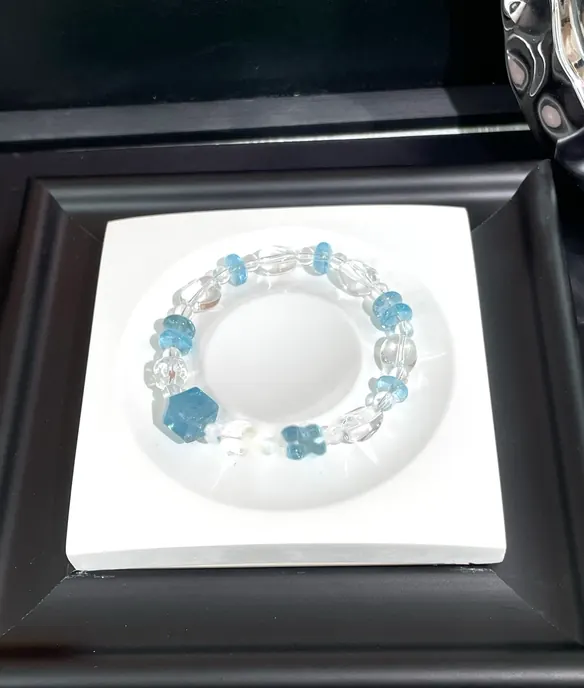
"There is something white inside — is it damaged?" Almost always, no. It is an inclusion, and it is the clearest evidence you are holding a natural stone rather than glass.
What is actually in there
RM1 Soft white wisps, common in rose quartz and strawberry quartz. These are microscopic mineral fibres or fluid channels trapped while the crystal grew.
RM1 Flat, feather-like sheets that catch the light at certain angles. A naturally rejoined internal surface — the crystal split during growth and sealed back together.
RM1 Fine straight lines near the surface, like frost on glass. Stress fractures from pressure and temperature change underground.
RM1 When a veil sits at the right angle to light, it refracts. Some people pay more for these. They are the same feature as a "flaw".
What is not an inclusion
There are real defects, and we do not ship them:
- Chips or breaks at the drill hole
- Cracks that go all the way through a bead
- Colour that has clearly been dyed, and rubs off
- Glass or resin sold as quartz
Those are quality problems. Cotton and veils are not.
The trade-off nobody mentions
Perfectly clear, evenly coloured beads at a low price are almost always glass, or heavily treated material. Genuine flawless natural quartz exists — it is graded, certified, and priced accordingly.
An honest natural bracelet in a normal price range will have variation between beads. That is the deal.
How we handle it
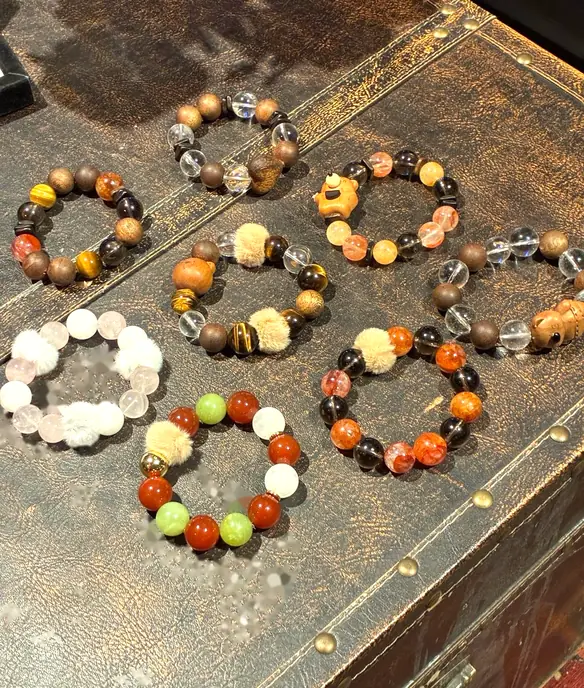
Every batch is laid on white cloth and checked bead by bead. We reject structural cracks and drill-hole damage. We keep cotton and veils, because removing them would mean not selling natural stone.
We photograph the actual product. If a specific piece has a mark you would notice, we mention it. Ask us for a photo of the exact piece before you order — we will send one.